



आज की दुनिया में सबसे ज़्यादा demand जिस programming language की है, वो है Python। अगर आप beginner हो और programming सीखना चाहते हो, तो यह article specially आपके लिए है। इस Python Programming Tutorial in Hindi में हम step-by-step Python को शुरुआत से (Beginner Level) लेकर Pro level तक cover करेंगे।
Python Programming क्या है और क्यों सीखें ?
Python एक high-level, interpreted, object-oriented programming language है, जिसे 1991 में Guido van Rossum ने develop किया था। Python की सबसे बड़ी खासियत है इसकी simple और readable syntax – यानी इसका code लिखना और पढ़ना बहुत आसान है, जैसे आप English में instructions दे रहे हो। इसी वजह से इसे beginner-friendly language कहा जाता है।
Features of Python Programming
- Interpreted Language: इसका मतलब है कि Python code को पहले compile करने की ज़रूरत नहीं होती। आप code लिखो और तुरंत run करो।
- Cross-Platform: Python Windows, MacOS, Linux, Android, यहाँ तक कि IoT devices पर भी run होता है।
- Open Source: Python completely free है और इसका source code publicly available है। आप चाहो तो इसमें contribution भी कर सकते हो।
- Huge Libraries & Frameworks: Python में हजारों ready-made libraries और frameworks हैं, जैसे Django (Web Development), TensorFlow (Machine Learning), Pandas (Data Analysis), Flask (Microservices), आदि।
- Multi-purpose Language: Python का use हर field में होता है – Web Development, Data Science, Artificial Intelligence, Machine Learning, Automation, Cyber Security, Scripting, Robotics और Gaming तक।
अगर आप IT industry में career बनाना चाहते हो, तो Python सीखना must है।
Python Programming क्यों सीखना चाहिए ?
- Easy to Learn: अगर आप beginner हो और पहली बार programming सीख रहे हो, तो Python आपके लिए सबसे आसान language है।
- Career Opportunities: आज की IT industry में Python developers की demand बहुत ज्यादा है।
- Community Support: Python का community support बहुत बड़ा है। अगर आपको coding में कोई problem आती है तो आपको internet पर आसानी से solution मिल जाएगा।
- Future-Proof Skill: AI और Data Science जैसे future technologies में Python सबसे ज़्यादा use होने वाली language है।
Simple Words में: Python एक ऐसी programming language है जो easy भी है और powerful भी। Beginners इसे आसानी से सीख सकते हैं और professionals complex applications भी बना सकते हैं।
Python Install कैसे करें?
Python install करना बहुत आसान है।
1. Windows पर Installation:
- Python की official website पर जाओ → https://python.org
- Latest version download करो।
- Installation के समय “Add Python to PATH” पर check जरूर करें।
- CMD (Command Prompt) खोलें और type करें:
python –version
✅ अगर version दिखे तो Python install हो चुका है।
2. Mac पर Installation:
- MacOS में already Python pre-installed आता है।
- Terminal में check करें:
python3 –version
अगर update चाहिए तो Homebrew install करके run करें:
brew install python
3. Linux पर Installation:
- Linux distributions में Python pre-installed रहता है।
- Check करें:
python3 –version
First Python Program (Hello World Example)
Python का सबसे basic program है – Hello World.
👉 Example:


बस इतना simple है Python में coding शुरू करना।
ये भी पढ़ें : कंपाइलेशन क्या है पूरी जानकारी
Variables in Python Programming
Variable को आप एक नाम दिया हुआ storage box मान सकते हैं, जिसमें हम data temporarily store करते हैं। जब भी आप Python में कोई value assign करते हो, तो वह memory में store हो जाती है और उस value को access करने के लिए variable का नाम use किया जाता है। Python में variable बनाने के लिए आपको किसी special keyword की ज़रूरत नहीं पड़ती — बस variable का नाम लिखकर = operator के साथ value assign कर दो। जैसे:

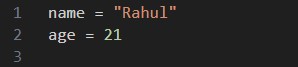
ऊपर दिए code में name और age दोनों variables हैं, जिनमें string और integer values store की गई हैं। Variable naming rules simple हैं — नाम meaningful होना चाहिए, space नहीं होना चाहिए, और digit से start नहीं होना चाहिए।
Data Types in Python Programming
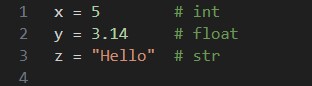
हर variable की कोई न कोई data type होती है, जो बताती है कि उसमें किस तरह का data store किया गया है। Python automatically data type detect कर लेता है, आपको manually declare करने की ज़रूरत नहीं होती। Python में कुछ common data types हैं:
- int (Integer numbers, जैसे 10, -5)
- float (Decimal numbers, जैसे 14, -0.99)
- str (String/text, जैसे “Hello”, “TazaHindi”)
- bool (Boolean values: True या False)
- list (Multiple items in ordered collection, जैसे [1,2,3])
- tuple (Immutable ordered collection, जैसे (1,2,3))
- dict (Key-value pairs, जैसे {“name”: “Rahul”, “age”: 21})
इसलिए जब आप Python में variable बनाते हो, तो उसके साथ automatically data type जुड़ जाता है। Example:

Operators in Python Programming
Python में operators वे special symbols या keywords होते हैं जिनका use हम variables और values पर operations perform करने के लिए करते हैं। Simple words में, operator एक ऐसा tool है जो data के साथ calculation या comparison करने में मदद करता है। Python में कई प्रकार के operators available हैं: Arithmetic Operators (जैसे +, -, *, / जो addition, subtraction, multiplication, division करते हैं), Comparison Operators (जैसे ==, !=, <, > जो दो values की तुलना करते हैं), और Logical Operators (and, or, not जो conditions combine करने में काम आते हैं)। Example के लिए:
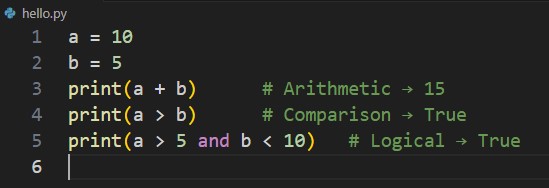

Operators coding को powerful और flexible बनाते हैं क्योंकि इनके बिना calculation, decision-making और conditions को implement करना possible नहीं होता।
1. Arithmetic Operators
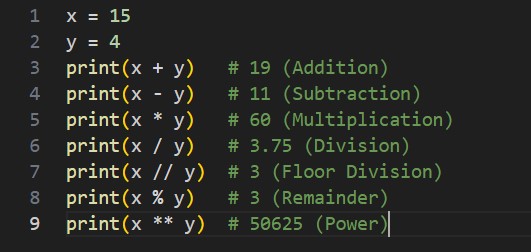
Python में Arithmetic Operators का use basic mathematical calculations करने के लिए किया जाता है। ये operators वही होते हैं जिन्हें आप रोज़ math में use करते हैं, जैसे addition, subtraction, multiplication, division आदि। Python में commonly used arithmetic operators हैं: + (addition), – (subtraction), * (multiplication), / (division – हमेशा float result देता है), // (floor division – integer result देता है), % (modulus – remainder देता है), और ** (exponentiation – power calculation के लिए)। Example:

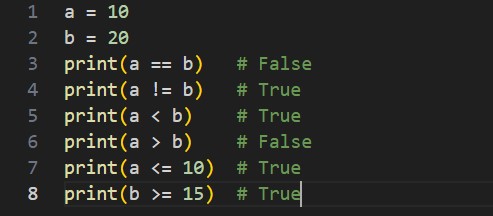
2. Comparison Operators
Python में Comparison Operators का use दो values या variables को compare करने के लिए किया जाता है। जब हम comparison करते हैं तो result हमेशा Boolean (True या False) में मिलता है। Example के लिए, == check करता है कि values equal हैं या नहीं, != check करता है कि values unequal हैं या नहीं, < और > check करते हैं कि value छोटी या बड़ी है, और <=, >= check करते हैं कि value छोटी/बड़ी या equal है। Example:

3. Logical Operators
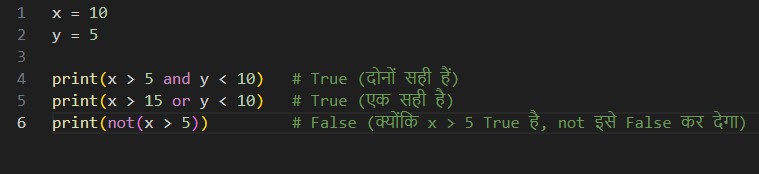
Python में Logical Operators का use multiple conditions को combine करने और उनके result को evaluate करने के लिए किया जाता है। ये operators हमेशा Boolean values (True/False) के साथ काम करते हैं और final output भी True या False में देते हैं। Python में तीन main logical operators हैं: and (जब दोनों conditions True हों तभी True देता है), or (जब कम से कम एक condition True हो तो True देता है), और not (condition का उल्टा result देता है, यानी True को False और False को True बना देता है)। Example:

ये भी पढ़ें : How to Convert String to Enum in C#: A Comprehensive Guide
Control Statements in Python Programming
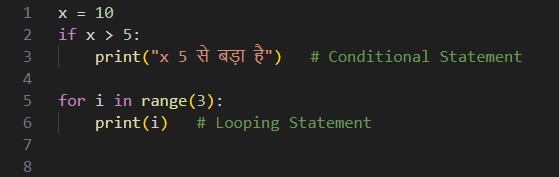
Python में Control Statements का use program के flow को control करने के लिए किया जाता है। Simple words में, ये वो instructions हैं जो बताते हैं कि किसी condition के आधार पर कौन-सा code चलेगा और कितनी बार चलेगा। Control statements तीन तरह के होते हैं: Conditional Statements (जैसे if, if-else, if-elif-else जो decisions लेने के लिए use होते हैं), Looping Statements (for loop, while loop जो किसी block of code को बार-बार repeat करने के लिए use होते हैं), और Jump Statements (break, continue, pass जो loop के flow को बदलने के लिए use होते हैं)। Example:

Loops in Python:
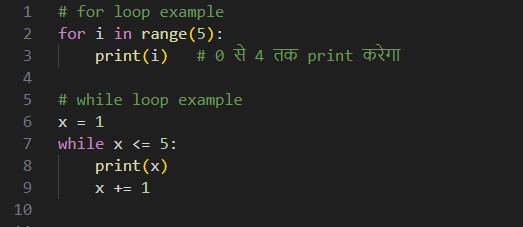
Python में Loops का use किसी block of code को बार-बार repeat करने के लिए किया जाता है, जब तक कोई condition True रहती है। Loops programming को powerful और time-saving बनाते हैं क्योंकि इससे हमें बार-बार same code manually लिखने की ज़रूरत नहीं होती। Python में दो main loops होते हैं: for loop और while loop। for loop का use तब होता है जब हमें पहले से पता हो कि कितनी बार code run करना है, जैसे किसी list के items पर iterate करना। वहीं while loop तब use होता है जब हमें किसी condition के True रहने तक code को repeat कराना हो। Example:

Functions in Python Programming
Python में Functions ऐसे reusable blocks of code होते हैं जिनका use किसी specific task को perform करने के लिए किया जाता है। Simple words में, function एक machine की तरह होता है जिसमें आप input देते हो (parameters/arguments), वो कुछ processing करता है और फिर आपको output देता है (return value)। Functions से code ज़्यादा organized, readable और reusable बनता है। Python में दो तरह के functions होते हैं: Built-in functions (जैसे print(), len(), type() आदि) और User-defined functions (जो आप खुद def keyword का use करके बनाते हो)। Example:
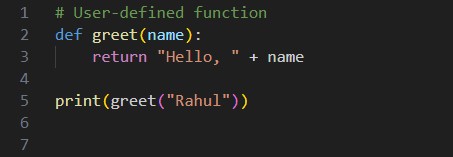

ऊपर दिए गए code में greet() एक function है जो किसी भी नाम को input लेता है और उसे greeting message के साथ return करता है। Functions programming का backbone हैं क्योंकि complex programs को छोटे-छोटे manageable parts में divide करने में ये बहुत मदद करते हैं।
ये भी पढ़ें : प्रधानमंत्री किसान मानधन योजना क्या है पूरी जानकारी
Lists, Tuples, Dictionaries in Python Programming
Python programming में Lists, Tuples और Dictionaries वो data structures हैं जिनका use multiple values को store और manage करने के लिए किया जाता है।
List एक ordered और changeable collection होती है, यानी आप items add, remove या modify कर सकते हैं। Example: fruits = [“apple”, “banana”, “mango”]।
Tuple भी ordered collection है लेकिन यह immutable होती है, यानी once create करने के बाद items change नहीं कर सकते। Example: numbers = (1, 2, 3)।
Dictionary एक unordered collection होती है जिसमें data key-value pairs के रूप में store होता है। Example: student = {“name”: “Rahul”, “age”: 21}।
Lists, Tuples और Dictionaries programming में बहुत useful हैं क्योंकि इन्हें use करके हम complex data को efficiently store, access और manipulate कर सकते हैं।
1. List (Changeable, Ordered)
fruits = [“apple”, “banana”, “mango”]
print(fruits[0]) # apple
2. Tuple (Unchangeable)
numbers = (1, 2, 3, 4)
print(numbers[1]) # 2
3. Dictionary (Key-Value Pairs)
student = {“name”: “Rahul”, “age”: 21}
print(student[“name”]) # Rahul
File Handling Basics
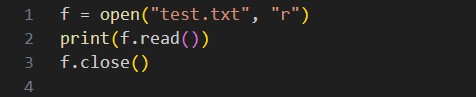
Python में file read/write करना बहुत आसान है।
File Write Example:


File Read Example:

Next Step → Python Projects
अब आपने basics सीख लिए। Next step है Python Projects बनाना। Projects करने से आपका confidence और skills दोनों grow होंगे।
👉 Example Projects:
- Calculator
- To-do App
- Weather App using API
- Web Scraper
- Basic Blog Website
📌 Next Article: Python Projects in Hindi – Beginner to Advanced (Coming Soon on TazaHindi.com)
Best Way to Learn Python in 2025
2025 में Python सीखने का सबसे अच्छा तरीका है hands-on practice और project-based learning। सिर्फ theory पढ़ने से skills develop नहीं होती है, इसलिए आपको रोज़ Python programming की practice करनी चाहिए। Beginners को पहले basic concepts जैसे (variables, data types, operators, loops, functions) के बारे में जानकारी हासिल करनी चाहिए, फिर धीरे-धीरे advance topics i.e. lists, dictionaries, file handling और classes सीखनी चाहिए। इसके बाद small projects जैसे calculator, to-do app, web scraper, mini-games बनाना start करें। साथ ही, online tutorials, YouTube channels, coding platforms (जैसे HackerRank, LeetCode, Codecademy) का use करें। 2025 में AI और automation के लिए Python की demand बहुत high है, इसलिए real-world projects पर focus करना और GitHub पर अपने projects share करना career के लिए सबसे effective तरीका होगा। Practice, experimentation और project building को अपना daily habit बनाइए, यही Python सीखने का सबसे smart और future-proof तरीका है।
Conclusion
इस Python Programming Tutorial in Hindi में हमने Python को शुरू से step-by-step सीखा – installation से लेकर variables, operators, loops, functions, file handling तक। Python आसान language है और beginners के लिए best choice है। अगर आप regularly practice करते हो, तो आप जल्दी ही Pro level पर पहुँच सकते हो।
👉 अगर आपको यह Python Programming Tutorial in Hindi helpful लगा, तो इसे अपने दोस्तों के साथ share करें।
Bookmark की जिए tazahindi.com को और सीखते रहिए step-by-step tutorials।
FAQs – Python Programming Tutorial in Hindi
Q1. Python सीखने में कितना time लगता है?
Ans. अगरआप daily 1–2 घंटे practice करते हैं तो 2–3 महीने में Python अच्छे से सीख सकतै है ।
Q2. क्या Python free है?
Ans. हाँ, Python completely free और open source है।
Q3. Python सीखने से job मिल सकती है?
Ans. हाँ, Python developers की demand बहुत high है – Web Development, Data Science, Machine Learning, AI, Automation जैसे fields में।
Q4. Python सीखने के लिए कौनसा IDE best है?
Ans. VS Code best options हैं।
Q5, Python में Projects बनाना कहाँ से सीखें ?
Ans. आप TazaHindi.com पर upcoming tutorials follow कर सकते हैं।